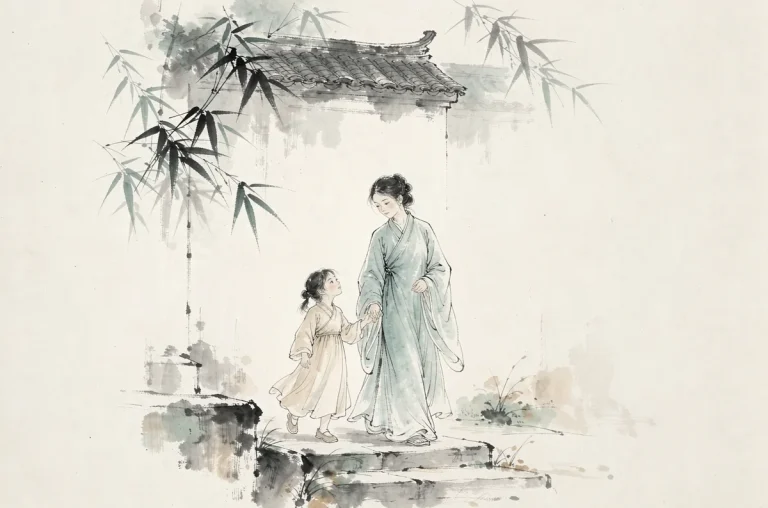

EN: At HSK 5, you know enough words to read a novel. But when the sentence stretches to 40 characters and the narrator starts thinking in metaphors, your brain short-circuits. Here’s how to fix that — with one free story.
中文: HSK 5 的你,词汇量够读小说了。但句子一拉到 40 字、叙述者开始用比喻思考时,大脑就短路。这篇指南教你用一本免费故事破局。
At HSK 5, your vocabulary is enough to read a novel. But when sentences stretch to 40 characters and the narrator starts thinking in metaphors, your brain short-circuits. This guide shows you how to break through — with one free story.
▶ Read it free → · 选 “B2 HSK 5 FREE”
Select “B2 HSK 5 FREE”
1. Why this story (and why B2 hits different)
At A2, stories are about what happened: 我去了市场,我买了苹果,我回家了。
在 A2,故事讲的是发生了什么:我去了市场,我买了苹果,我回家了。
At A2, stories are about what happened: I went to the market, I bought apples, I went home.
At B2, stories are about what it felt like: 我站在桥下,风从河面吹上来,带着一种说不清的凉意——不是冷,是一种提醒,提醒我有些事已经回不去了。
到了 B2,故事讲的是感觉是什么:我站在桥下,风从河面吹上来,带着一种说不清的凉意——不是冷,是一种提醒,提醒我有些事已经回不去了。
At B2, stories are about what it felt like: I stood under the bridge, wind blowing up from the river surface, carrying an indescribable coolness — not cold, but a reminder that some things can’t be undone.
That shift — from action to interiority — is why B2 feels like hitting a wall. Under the Bridge is built exactly for that wall. Short sentences, but the emotional weight sits between them.
这种转变——从动作到内心——就是为什么 B2 感觉像撞墙。Under the Bridge 就是为那堵墙而写的。句子短,但情感重量藏在句子之间。
That shift — from action to interiority — is why B2 feels like hitting a wall. Under the Bridge is built exactly for that wall. Short sentences, but the emotional weight sits between them.
2. 4 language points that unlock B2 reading
① 起来 (qǐlái) — not just “get up”
At HSK 5, 起来 becomes a directional complement with abstract meaning:
到了 HSK 5,起来变成了一个带抽象方向的结果补语:
At HSK 5, 起来 becomes a directional complement with abstract meaning:
- 想起来了 → remembered (something surfaced)
想起来了 → 想起来了(某事浮出水面)
remembered — something surfaced in your mind - 听起来不错 → sounds good (enters your ear and lands somewhere)
听起来不错 → 听起来不错(进入耳朵,落在某个地方)
sounds good — enters your ear and lands somewhere - 风从河面吹起来 → rises up from the river
风从河面吹起来 → 风从河面吹起来(从河面升起)
wind rises up from the river surface
🔑 Key insight: 如果 起来 后面没有物理动作,它几乎一定在表达”某种感觉浮现了”。
Key insight: If 起来 is not followed by a physical action, it almost always expresses “some feeling surfacing.”
② 说不清的 / 说不出的 (shuō bù qīng de) — ineffable
- 一种说不清的凉意
an indescribable coolness - 他脸上带着说不出的表情
His face carried an indescribable expression.
这是 B2 阅读的高频结构:说 + 不 + complement。意思是”无法用语言描述”。
This is a high-frequency B2 reading structure: 说 + 不 + complement. It means “cannot describe in words.”
③ 不是……而是…… (bú shì… ér shì…) — not X, but Y
- 不是冷,而是一种提醒
Not cold, but a reminder. - 不是我忘了,而是我不想记得
Not that I forgot, but that I don’t want to remember.
HSK 5 标志性对比结构。用来表达”表面看是 A,实际是 B”——中文叙述者最爱用的思维转折。
HSK 5 signature contrast structure. Used to express “on the surface it’s A, but actually it’s B” — a favorite thinking pivot for Chinese narrators.
④ 已经……了 (yǐjīng… le) — not just past tense
在 B2 里,已经……了 常表达不可逆性:
In B2, 已经……了 often expresses irreversibility:
- 有些事已经回不去了
Some things already can’t be undone. - 我们已经不是朋友了
We already aren’t friends anymore.
重点不是”完成”,是”没有回头路”。
The focus isn’t on “completion” — it’s on “no turning back.”
| 中文 | 拼音 | EN | HSK |
|---|---|---|---|
| 桥 | qiáo | bridge | 4 |
| 河面 | hémiàn | river surface | 5 |
| 凉意 | liángyì | coolness (feeling) | 5 |
| 提醒 | tíxǐng | to remind | 4 |
| 回不去 | huí bú qù | can’t go back | 5 |
| 表面 | biǎomiàn | surface / on the surface | 5 |
3. Read it in 3 passes (MandarinMiles method)
B2 的读法跟 A2 不同——你不需要每个词都认识才能”读下去”。你需要的是容忍模糊 + 抓主干。
B2 reading is different from A2 — you don’t need to know every word to “keep going.” What you need is tolerance for ambiguity + grabbing the main structure.
Pass 1 — 听读滑行 (Listen & Glide)
开音频 + 开拼音。不查词。让声音带着你走完全文。目标:感受情绪走向——主角是平静的?焦虑的?怀念的?不要停在某个不认识的词上。
Turn on audio + pinyin. Don’t look up words. Let the audio carry you through. Goal: feel the emotional arc — is the narrator calm? anxious? nostalgic? Don’t stop at any unknown word.
Pass 2 — 点词存库 (Tap & Bank)
第二遍,关掉英文轨。遇到卡住的词点一下 → 存进词库。但注意:只查你觉得”影响理解情绪”的词。形容词和抽象名词优先,副词和连词先放过。
Second read: turn off the English track. Tap any stuck word → save to word bank. But note: only look up words you feel “block emotional understanding.” Prioritize adjectives and abstract nouns; let adverbs and conjunctions pass.
💡 B2 心法:你不需要知道每个词的意思才能懂一段。你需要知道”这段是开心的还是难过的”。
B2 mindset: You don’t need to know every word’s meaning to understand a passage. You need to know: is this passage happy or sad?
Pass 3 — 长句切分 (Sentence Surgery)
第三遍,选 2-3 个最长句子,手动切分:
Third read: pick 2-3 of the longest sentences and manually split them:
- 找到主语(谁) → Find the subject (who)
- 找到动词(做了什么/感觉什么) → Find the verb (did what / felt what)
- 忽略修饰语(形容词、插入语) → Ignore modifiers (adjectives, insertions)
例:风从河面吹上来,带着一种说不清的凉意。
→ 风 吹上来 + 带着凉意。(完)
Example: Wind blows up + carries coolness. (Done.)
💬 Learner note (from a B2 user):
“Pass 3 改变了我。以前我一个字一个字读,现在我先找’谁+干什么’。速度翻倍,理解没掉。”
“Pass 3 changed me. Before I read character by character. Now I first find ‘who + does what.’ Speed doubled, comprehension didn’t drop.”
4. Culture bite: 为什么中文故事爱用”桥”和”水”
[Difficulty: bilingual · high info density · HSK 3+ readable]
EN: In Chinese literature, bridges aren’t just infrastructure — they’re metaphors for transition. 过桥 means “crossing over” into a new phase of life. Water beneath a bridge often represents time flowing past, things you can’t retrieve. Under the Bridge taps into this tradition without being heavy-handed.
中文: 中文文学里,”桥”不只是路——它是”过渡”的隐喻。过桥 = 进入人生新阶段。桥下的水常代表”流走的时间,回不去的事”。这篇故事轻轻用了这个传统,不重,但你读完会感觉到。
In Chinese literature, “bridge” isn’t just a road — it’s a metaphor for transition. Crossing the bridge = entering a new life phase. Water under the bridge often represents flowing time, things you can’t get back. This story lightly uses that tradition — not heavy, but you’ll feel it after reading.
📚 延伸 (Related): Chinese Opera (C1) 里有更重的意象使用;The City Park (A2) 是同一作者的轻量版场景描写练习。
Chinese Opera (C1) uses heavier imagery; The City Park (A2) is the same author’s lightweight scene-description practice.
5. FAQ
Q1: I’m HSK 4, can I try this?
A: 可以试。如果第一遍听懂了 60% 以上,就值得读。卡在超过 30% 的生词就退回 My Family at Home 或 A Conversation in the Café 再练。
Give it a try. If you understand 60%+ on the first listen, it’s worth reading. If you’re stuck on over 30% of the words, go back to My Family at Home or A Conversation in the Café and practice more.
Q2: Why is there no English translation for some sentences?
A: 因为 B2 的核心能力就是”在中文里思考”。翻译反而打断你。用音频 + 拼音 + 点词就够了。
Because the core skill of B2 is “thinking in Chinese.” Translations actually interrupt you. Use audio + pinyin + tap-to-lookup and you’re set.
Q3: How many times should I re-read?
A: 至少 3 遍,隔天读。B2 文本的信息密度高,第一遍只抓情节,第三遍才能抓到情绪。
At least 3 times, every other day. B2 texts have high information density — first read only catches plot, third read catches emotion.
6. Your next move
▶ Read Under the Bridge free on MandarinMiles → 选 “B2 HSK 5 FREE”
Select “B2 HSK 5 FREE”
▶ 用 Character Lookup 悬停查单字,不离开页面
Use Character Lookup to hover and check single characters without leaving the page
▶ 测测你真的在 B2 吗?→ Find your level
Test if you’re really at B2 → Find your level
▶ 读完这篇觉得难?退一步读 The City Park (A2) 找回手感
Found this hard? Step back and read The City Park (A2) to rebuild confidence